Forecasting load and generation in distribution grids
Machine-learning services forecast transformer load and distributed generation inside a distribution management system.
Anticipating electricity demand and distributed generation helps grid operators prepare for changing network conditions. Artelnics developed forecasting services for a distribution management system, bringing load and generation predictions into operational analysis and planning.
Challenge
Distribution grid operators need to understand how electricity demand and local generation may evolve across different areas and facilities. That forward view supports decisions about operations planning, feeder reconfiguration and the integration of renewable generation.
The challenge is to bring these forecasts into the context of the network. A prediction needs to relate to the relevant transformer, generation facility or area, so it can contribute to the analysis carried out within a distribution management system.
Data
The forecasting module draws on the TPC database, combining electrical measurements with information about the conditions in which the network operates. Its inputs include:
- Transformer loads: measurements describing electricity demand across the distribution network.
- Renewable plant generation: records of electricity produced by distributed generation facilities.
- Weather and calendar variables: meteorological conditions and calendar information that provide context for demand and generation patterns.
- Area and facility metadata: information linking the data to the network locations and assets being analyzed.
Solution
Artelnics implemented machine-learning services covering clustering, model training, forecast execution and validation metrics. The services were integrated with a distribution forecast module through a database-backed deployment.
This combines model development with the execution and evaluation of forecasts. The module addresses both electricity consumption and generation, providing a forward view of the two quantities that shape distribution grid conditions.
Load and generation forecasts across multiple areas and facilities, over short-, medium- and long-term horizons.
Database-backed forecasting services integrated into a distribution forecast module.
Results
The system provides load and generation forecasts for operations analysis and planning. These outputs help a distribution management system evaluate expected demand, renewable generation and future network conditions.
The practical value is a forward-looking basis for examining operating scenarios: anticipating load, considering the contribution of distributed generation and informing network planning. Forecasts support these decisions alongside the operator’s knowledge of the grid and its operating constraints.
Illustrations
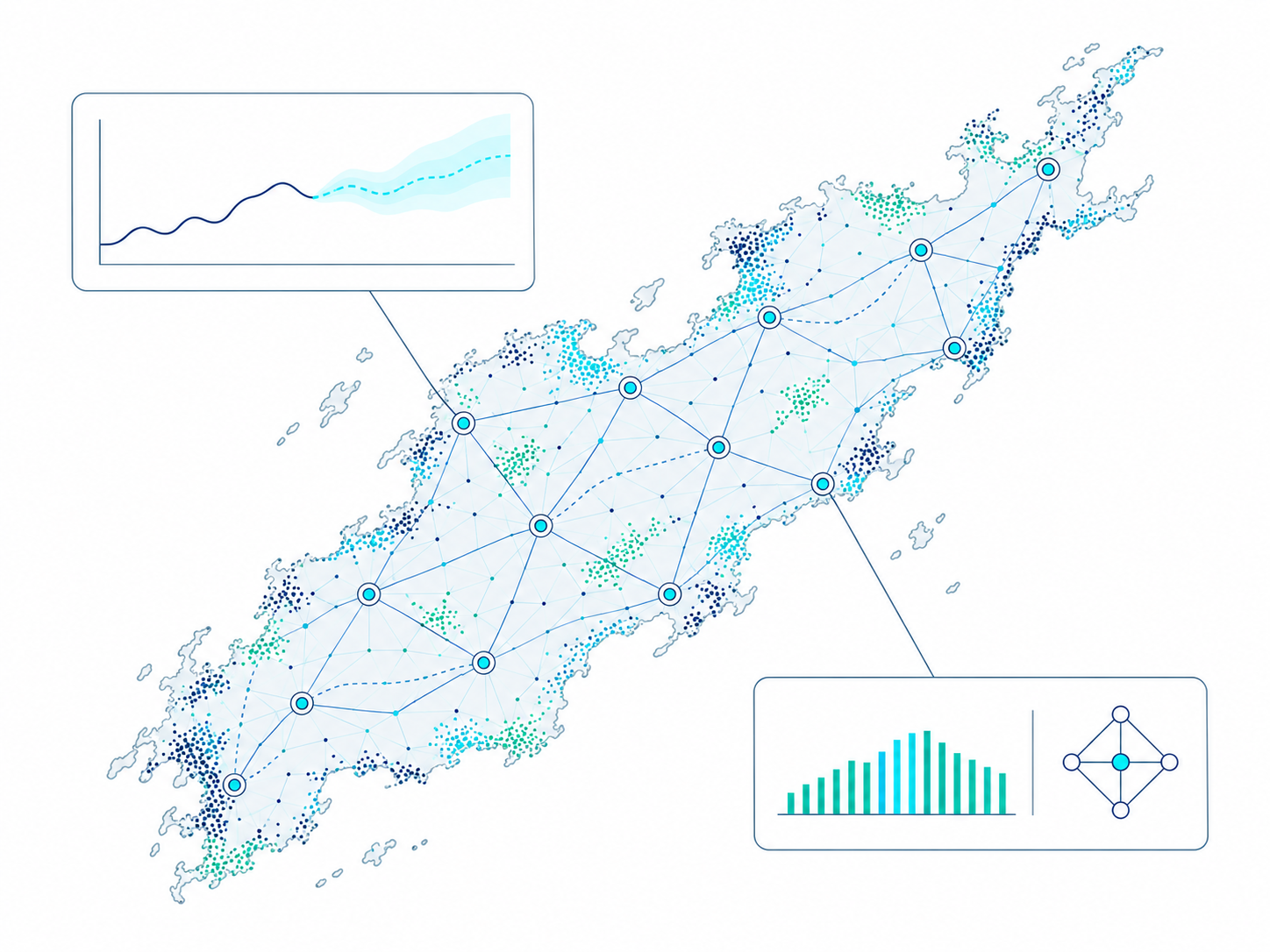
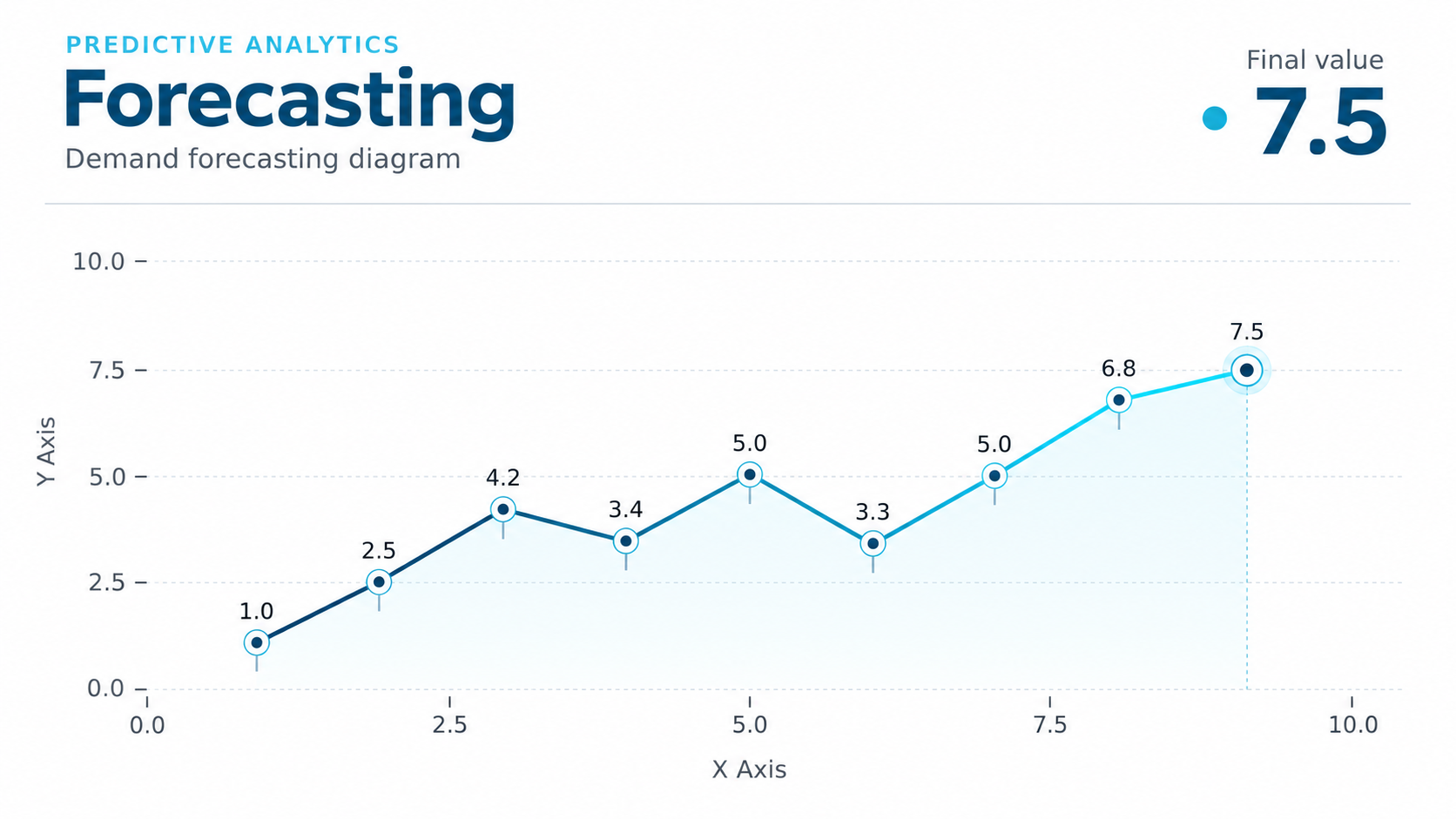
The following conceptual visuals illustrate network-level analysis and a forecast series.